
Help and advice for small business owners and the self-employed, from operating safely to finance and furlough
- Business Rescue Business Growth
- Comments: 0
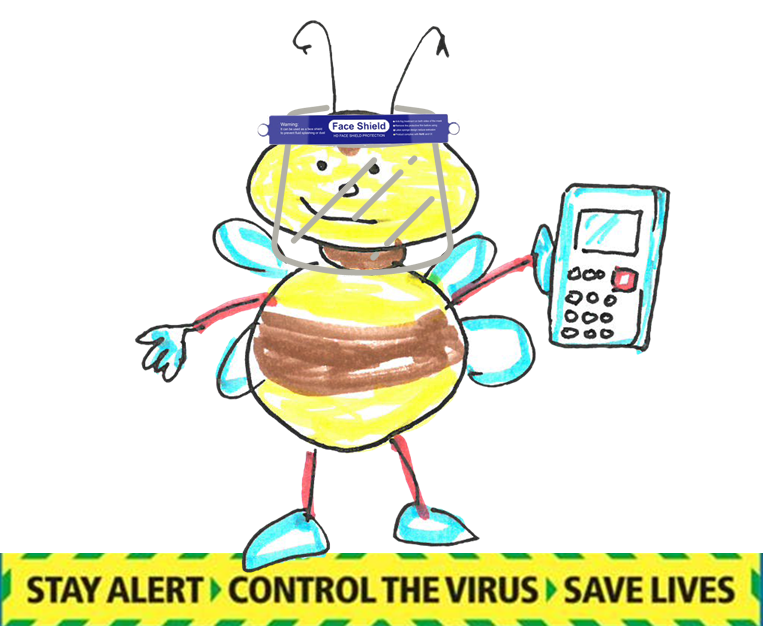
Most of us have been longing for a haircut during lockdown and even more so if we’ve had a DIY disaster! Now at last, shaggy-haired Brits can go to the hairdressers. However, salons look very different now, social distancing measures mean that screens, hand sanitizer and protective gear are the new normal. It’s great to see businesses opening but whether you run a hairdressers, a restaurant, or an office, there’s a lot to consider. Small business owners need to follow rules to operate safely, while also staying on top of everything from finance to furlough. We’ve put together some help and advice for small business owners and the self-employed to guide you through the coming weeks. This will largely focus on England, as regulations for Scotland, Wales and Northern Ireland may differ. If you need any further help or pointing in the right direction, contact Be Rescued, we’re here to help.
Help and advice for small business owners and the self-employed
1. How to operate safely during Covid-19
Last month pubs, restaurants, gyms, swimming pools, hairdressers, barbers and beauticians reopened. Businesses have to take necessary precautions and follow regulations to ensure they can operate safely.
The government has outlined five steps to working safely:
- Do a Covid-19 risk assessment in line with HSE guidance to establish what health and safety guidelines to put in place. Share the results with your workforce and on your website.
- Develop cleaning and hygiene procedures including washing hands regularly, and frequently cleaning and disinfecting objects and surfaces. Provide hand sanitizers around the workplace.
- Help people to work from home by a range of means including ensuring they have the right equipment and including them in communications.
- Stay 2 metres apart, where possible. Measures include putting up signs to remind people of social distancing and arranging one-way traffic through the workplace.
- If 2 metres is not possible, take steps to manage the risk. This could include ensuring that co-workers are facing away from each other and using screens or barriers to separate people.
For full guidance on the five steps see: https://www.gov.uk/guidance/working-safely-during-coronavirus-covid-19/5-steps-to-working-safely
The government has published industry specific guides see https://www.gov.uk/guidance/working-safely-during-coronavirus-covid-19
2. How to reassure your customers
As we look forward to getting back to some kind of normality, with the easing of some lockdown restrictions, it’s only natural that we do so with some trepidation. Many of us have worked from home for weeks and not ventured beyond the local supermarket, strictly adhering to the government’s earlier advice to ‘stay home’. Businesses need to reassure people to encourage footfall and get customers spending at the tills.
Let people know you are open for business and following guidelines to ensure visitors and customers have a safe experience. If you are a customer facing business use social media, email campaigns and your website to explain the steps you have taken. Better still, show people. Post video clips walking customers through the new layout of your store, restaurant, salon etc. and talk through any new procedures. This will reassure nervous customers.
Small business owners can produce videos on their mobile phones. Most mobile footage is high quality however customers will forgive something that is a little rough around the edges. This often makes for a more authentic experience and builds trust. Customers will see you are doing your best to reassure them and welcome them back to your business.
3. How to keep records for track and trace
Many businesses are being asked to record details of visitors, customers and staff so that they can be used to detect people who may have come into close contact with someone with the coronavirus.
The guidance applies to the hospitality sector including pubs and restaurants, to tourism and leisure e.g. hotels, zoos, to close contact services e.g. hairdressers, to facilities provided by local authorities, and to places of worship.
Information to collect includes:
Staff: the names of staff working at the premises, a contact phone number, the dates and times staff work.
Customers and visitors: the name of the customer or visitor. You can record the name of a ‘lead member’ of a group and the number of people in the group. A contact number for the customer/visitor or the ‘lead member.’ Date of visit along with arrival time and, where possible, departure time. If the party was looked after by one member of staff, the name should be recorded next to the customer name.
For full guidance see: https://www.gov.uk/guidance/maintaining-records-of-staff-customers-and-visitors-to-support-nhs-test-and-trace
Enterprise Nation has a toolkit on their website for small businesses in England:
4. Managing cashflow
Small business owners need to keep a constant eye on cashflow. However, in times of crisis this becomes even more essential. It all comes back to the same mantra – Plan, Plan, Plan.
Look at what work you have in the pipeline and collect any money owed to your business. This will give you an idea of cashflow coming into the business. It is vital that you keep lines of communication open. Talk to your customers about any future business or orders and talk to suppliers about their credit lines.
It really helps if small business owners do a 14-week forecast of income and expenditure, and review this on a weekly basis. On week ten start the process again and above all keep going. These are difficult times, so, try not to panic. The crucial thing is to stay on top of things and understand where you are as a business.
In business things can get out of control quickly but you’re not alone. If you’re experiencing cashflow difficulties or another financial problem, Be Rescued is here to help. We’ll look at the causes and help you find the answer. To find out more about how we can help, call Maria on 01366 387672.
5. What funding schemes are available for small businesses and the self- employed?
While some businesses have reopened, others remain closed. Some businesses need help to continue to operate while others need support to avoid permanent closure. The government has introduced a raft of measures to help small businesses and the self-employed. Along with loans, tax relief and grants, there is industry specific help for sectors, such as the £1.57 billion rescue package for the arts.
By the 26 July, banks had lent 1,113,312 loans worth £33.68 billion through the Bounce Back Loan Scheme (ref: https://www.gov.uk/government/collections/hm-treasury-coronavirus-covid-19-business-loan-scheme-statistics). For many small businesses, the loans are a lifeline. However, just bear in mind that borrowing money doesn’t always solve business problems. Business planning is essential for long-term, manageable and healthy financing of your business.
The self-employed will be able to make a claim for a second and final SEISS grant from 17 August 2020. Find out more: https://www.gov.uk/guidance/claim-a-grant-through-the-coronavirus-covid-19-self-employment-income-support-scheme
The Eat Out to Help Out Scheme should be a welcome boost for the hospitality industry. The scheme will encourage people to eat out at participating establishments every Monday, Tuesday and Wednesday between 3 and 31 August as many times as they like and get a 50% discount on food and non-alcoholic drinks up to £10 per diner.
Use the government support finder to find coronavirus financial support for your business: https://www.gov.uk/business-coronavirus-support-finder
6. What changes to furlough mean for small businesses
The furlough scheme has paid the salaries of 9.5 million workers. Employees can now go back to work part-time.
From 1 August, employers will have to start paying towards the scheme, making National Insurance and pension contributions for staff.
As the scheme winds down, in September employers will have to pay 10% of furloughed employees wages, rising to 20% in October.
In his A Plan for Jobs speech (published 8 July 2020), the Chancellor Rishi Sunak said:
“But while we can’t protect every job, one of the most important things we can do to prevent unemployment…is to get as many people as possible from furlough back to their jobs. So, today, we’re introducing a new policy to reward and incentivise employers who successfully bring furloughed staff back – a new Jobs Retention Bonus.”
An employer who brings someone back who was furloughed and continuously employs them through to January 2021 will receive a £1,000 bonus per employee. To get the bonus, the employee must be paid at least £520 on average, in each month from November to January.
For further information on what happens when the furlough scheme ends see: https://www.bbc.co.uk/news/explainers-52135342
7. How to adapt your business planning post-lockdown
Your market and consumers may have changed over recent months. You need to know that there is still a demand for your product or service.
Look at your industry and carry out customer research to identify trends and customers changing needs and wants. Service providers could discover a way to adapt an existing service to attract more business. You may uncover a way that you can tweak your product or service offering to create added value for customers.
You also need to review your marketing plan to check the relevance of key messages and any planned activity.
No time to do your research? We can help you make sure you are targeting the right audience with the right offering. To find out how Be Rescued can help see https://berescued.co.uk/bemapped.
8. Peers and competitors
Small business owners will benefit from reviewing what their peers and competitors are doing and seeing what their customers are saying about them. You can learn a lot through social listening (social media monitoring) on channels such as Twitter and Facebook.
Listening to what people are saying can really help during uncertain times. This could give you reassurance that you are going about things the right way or you might even spot an opportunity for your business.
You may well have business owners you keep in touch with or take part in online networking sessions. Your peers can be a great source of strength. You can share concerns and brainstorm ideas. If you don’t already belong to an online networking group, check out opportunities for your area and industry. At Be Rescued, we are big fans of networking, whether it’s in person or virtual.
9. Tips for staying positive
Yes, it’s rewarding but it can be hard running a business at the best of times. Small business owners and the self-employed are facing some really tough challenges at the moment. Here are a few tips on how to stay positive.
Focus on your personal development: There are lots of great webinars and courses around, some are free or low cost. Upskilling can benefit your business and is a really productive thing to do. At Be Rescued we’re huge fans of learning new things.
Make connections: Lockdown has made us appreciate the value of being with our loved ones. Making connections really helps us stay positive, whether it’s spending time with family or organising a Zoom catchup with a group of friends. Online networking is a great way to make contacts and sharing experiences with other business owners will help to lighten the load.
Ask for help: Running a business can be overwhelming. You’re expected to be knowledgeable about everything from marketing to accounts. There is plenty of advice for small business owners out there. Don’t struggle, ask for help. Be Rescued is here for the good times and the bad, do get in touch if you need us.
Make time for the things you enjoy: Whether you love music, walking or baking, don’t neglect your hobbies. It really pays small business owners to step away, even if it’s just for a few hours. You will come back refreshed and more able to tackle your work.
Look after your mental health: Stay informed but at the same time it is wise to stay away from negative news or messages that may trigger or cause you concerns and worries that you can’t control or may not even affect you directly. The coronavirus is having a huge impact on our mental health. If things are tough, get help. Speak to someone. The mental health charity Mind has lots of resources and support on their website https://www.mind.org.uk/
We hope we’ve been able to help by putting lots of advice for small business owners in one place. If you need any further assistance or pointing in the right direction, call Maria at Be Rescued on 01366 387672 or book an appointment with Maria at https://www.betterbusinessathand.app/ .
Please note, information is correct at 29.7.2020. Please consult government website https://www.gov.uk for most up-to-date advice and a full breakdown of rules and regulations.